Rudraksha beads have been valued in Indian spiritual traditions for centuries. Associated with Lord Shiva, these sacred beads are traditionally worn for spiritual practice, meditation and personal well-being. Today, Rudraksha is also widely available through online stores, making it important for buyers to understand how to identify an original Rudraksha before purchasing one.
With different Mukhi varieties, origins, sizes and price ranges available in the market, choosing an authentic bead can be confusing. Sellers may use terms such as Nepali Rudraksha, Indonesian Rudraksha, naturally formed Mukhi lines and laboratory-tested Rudraksha. Understanding these differences can help buyers make informed decisions.
This guide explains the key factors to consider when identifying an original Rudraksha, including Mukhi identification, geographical origin, physical characteristics and laboratory verification.
1. Understand What Makes a Rudraksha Original
Rudraksha is the seed of trees belonging to the Elaeocarpus genus, particularly Elaeocarpus ganitrus. The beads develop naturally and have distinct surface formations.
An original Rudraksha should be a naturally formed seed rather than an artificially manufactured or carved imitation. Its surface generally contains natural ridges and grooves, and its structure varies from bead to bead.
However, appearance alone cannot always establish authenticity. A bead may look natural but still require closer examination, especially when it is being sold as a rare or high-value Mukhi Rudraksha.
2. What Are Mukhi Lines in Rudraksha?
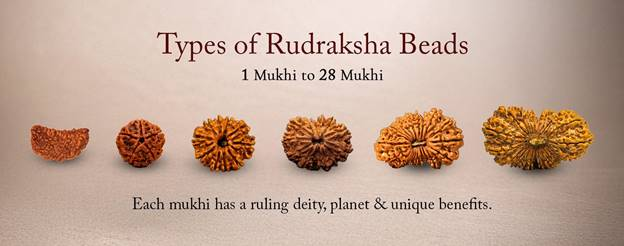
One of the most important characteristics of Rudraksha is its Mukhi, or face count.
Mukhi refers to the natural longitudinal divisions or clefts visible on the outer surface of a Rudraksha bead. These divisions typically extend from one end of the bead to the other.
Common varieties include:
- 1 Mukhi Rudraksha: Traditionally considered a rare and spiritually significant variety.
- 2 Mukhi Rudraksha: Traditionally associated with duality and harmony.
- 3 Mukhi Rudraksha: Traditionally associated with Agni.
- 4 Mukhi Rudraksha: Traditionally associated with Lord Brahma.
- 5 Mukhi Rudraksha: One of the most commonly available varieties.
- 6 Mukhi Rudraksha: Traditionally associated with Lord Kartikeya.
- 7 Mukhi Rudraksha: Traditionally associated with Goddess Mahalakshmi.
- 8 Mukhi Rudraksha: Traditionally associated with Lord Ganesha.
- 9 Mukhi Rudraksha: Traditionally associated with Goddess Durga.
- 10 Mukhi Rudraksha: Traditionally associated with Lord Vishnu.
These associations belong to religious and traditional beliefs, not scientifically established effects.
Important: Mukhi count should be determined by examining the natural formations of the bead. Artificial grooves or carved lines should not be mistaken for naturally formed Mukhi divisions.
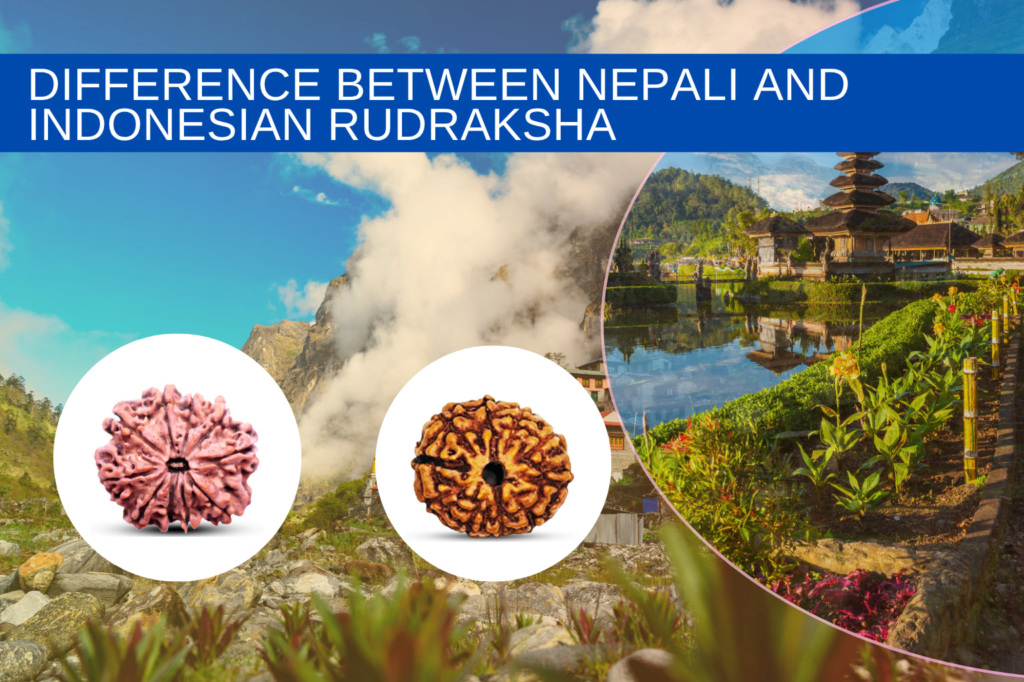
3. Nepali vs Indonesian Rudraksha: Understanding the Difference
Rudraksha beads are sourced from different geographical regions. Nepali and Indonesian varieties are among the most commonly discussed options in the market.
Nepali Rudraksha
Nepali Rudraksha Certified is generally known for its comparatively larger bead size and prominent surface ridges. Buyers often prefer it for its traditional appearance and availability in different Mukhi varieties.
Common characteristics include:
- Generally larger bead sizes.
- Prominent natural surface formations.
- More pronounced ridges in many specimens.
- Availability in different Mukhi categories.
Indonesian Rudraksha
Indonesian Rudraksha is generally smaller and has a comparatively smoother appearance.
Common characteristics include:
- Smaller bead sizes in many varieties.
- More compact surface formations.
- Lighter appearance in many specimens.
- Availability for malas and everyday jewellery.
Neither origin should automatically be considered more authentic than the other. Quality, natural formation, correct Mukhi identification and reliable sourcing matter more than origin alone.
4. Physical Characteristics to Examine
Before purchasing a Rudraksha, carefully examine the following characteristics.
Natural surface texture: Original Rudraksha beads generally have natural ridges, grooves and irregularities. Perfectly uniform patterns may deserve closer inspection.
Mukhi continuity: Observe whether the natural divisions extend along the bead. Artificially carved lines can sometimes appear convincing, so visual inspection should not be the only verification method.
Shape and structure: Natural Rudraksha beads may vary in shape, size and surface formation. Minor irregularities are not necessarily signs of poor quality.
Natural opening and internal structure: The internal compartments and seed structure can provide useful information during technical examination.
Condition of the bead: Check for cracks, excessive polishing, drilling damage, repairs or signs of artificial modification.
No single physical characteristic can conclusively establish authenticity. A combination of examination methods is more reliable.
5. Can Water, Copper Coins or Other Home Tests Verify Rudraksha?
Various traditional home tests are discussed in the market, including water tests, copper coin tests and other physical experiments.
However, these methods should not be treated as scientifically reliable proof of authenticity.
For example, whether a Rudraksha floats or sinks can depend on its density, moisture content, internal structure and other physical factors. This does not independently establish whether the bead is original.
Similarly, a copper coin test is not a dependable scientific method for confirming Mukhi count or authenticity.
Buyers should avoid making expensive purchasing decisions based only on these demonstrations.
6. Importance of X-Ray Testing and Laboratory Verification
For high-value, rare or expensive Rudraksha beads, professional examination can provide additional confidence.
X-Ray Examination
X-ray imaging can help examine the internal structure of a Rudraksha bead. It may reveal internal compartments and structural features that cannot be observed externally.
This can be useful when evaluating whether the internal structure is consistent with the claimed Mukhi count.
Laboratory Examination
A professional laboratory may examine the physical structure and other relevant characteristics of a bead.
Before relying on a certificate, buyers should check:
- Name and details of the testing laboratory.
- Unique report or certificate number.
- Description of the tested Rudraksha.
- Claimed Mukhi count.
- Whether the report corresponds to the exact bead being purchased.
- Availability of independent report verification.
A certificate should be genuine, traceable and relevant to the actual product. Not every certificate provides the same level of examination, so buyers should understand what the laboratory has actually verified.
7. Factors That Influence Rudraksha Prices
Rudraksha prices can vary significantly depending on several factors.
Mukhi count: Certain naturally occurring Mukhi varieties are less commonly available and may command higher prices.
Origin: Nepali and Indonesian Rudraksha may have different market pricing depending on their characteristics and sourcing.
Size and appearance: Bead size, natural formation and overall condition can influence market value.
Rarity and availability: Rare varieties may have limited supply, which can affect pricing.
Verification and documentation: Professional testing, traceable sourcing and reliable documentation may influence the final selling price.
A high price does not automatically mean that a Rudraksha is authentic. Similarly, a low price should encourage buyers to examine the product and seller carefully.
8. Checklist Before Buying an Original Rudraksha Online
Before placing an order, consider the following checklist:
- Check the exact Mukhi count mentioned in the product description.
- Ask whether the bead is Nepali or Indonesian.
- Request clear photographs of the actual product.
- Check the bead’s size and physical condition.
- Ask whether laboratory testing or X-ray documentation is available.
- Verify the certificate details, if provided.
- Review the seller’s return and replacement policy.
- Check customer support and business information.
- Avoid purchasing rare Rudraksha based only on exaggerated claims.
- Request clarification if the seller cannot explain the product’s origin or verification.
A transparent seller should be able to explain the product’s characteristics and provide relevant information before purchase.
9. Why Choose a Reliable Rudraksha Seller?
Buying Rudraksha is not simply about selecting a bead based on appearance or price. It is also about understanding its origin, natural characteristics and documentation.
A reliable seller should provide clear product descriptions, accurate photographs, transparent pricing and appropriate verification information. Buyers should have access to customer support when they need help understanding different Mukhi varieties or choosing a suitable product.
Mauhurtika Rudraksha focuses on offering Rudraksha beads, malas, pendants and spiritually significant products, with product information and verification options to help customers make informed purchasing decisions.
Explore the collection at Mauhurtika Rudraksha.
Conclusion
Identifying an original Rudraksha requires more than looking at its size, shape or surface grooves. Buyers should understand natural Mukhi formations, geographical origin, physical characteristics and the importance of professional verification.
For expensive or rare Rudraksha varieties, independent examination and traceable laboratory documentation can provide additional confidence. Avoid relying on popular home tests or unsupported claims when making a purchase.
The best approach is to choose a transparent seller, ask the right questions and verify the product before investing in it.
An informed purchase begins with understanding the Rudraksha, not simply believing its price or claims.