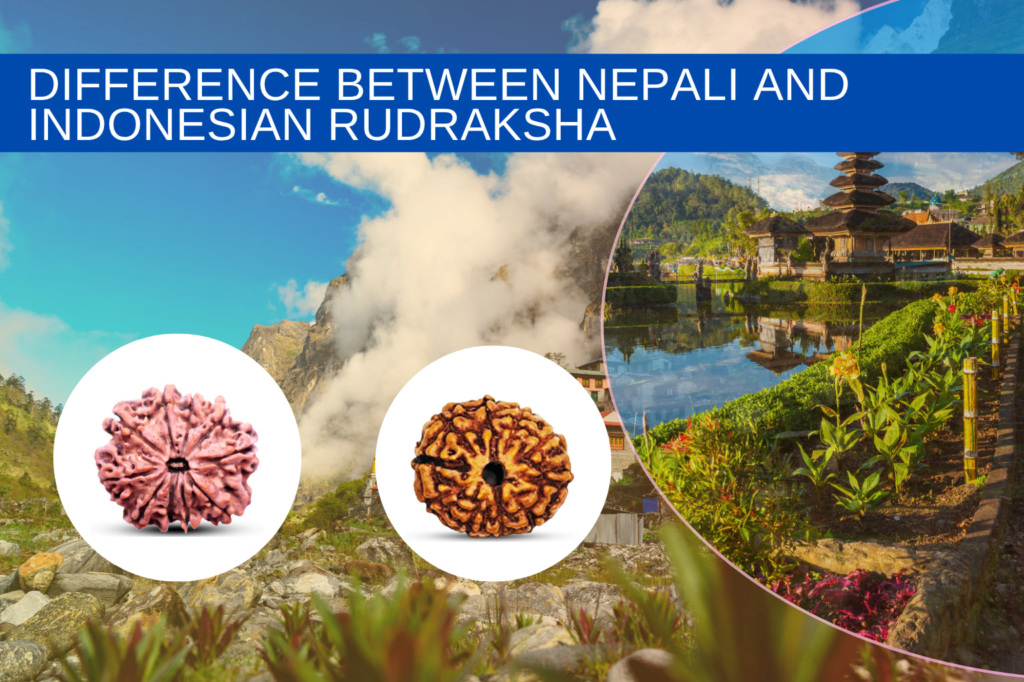
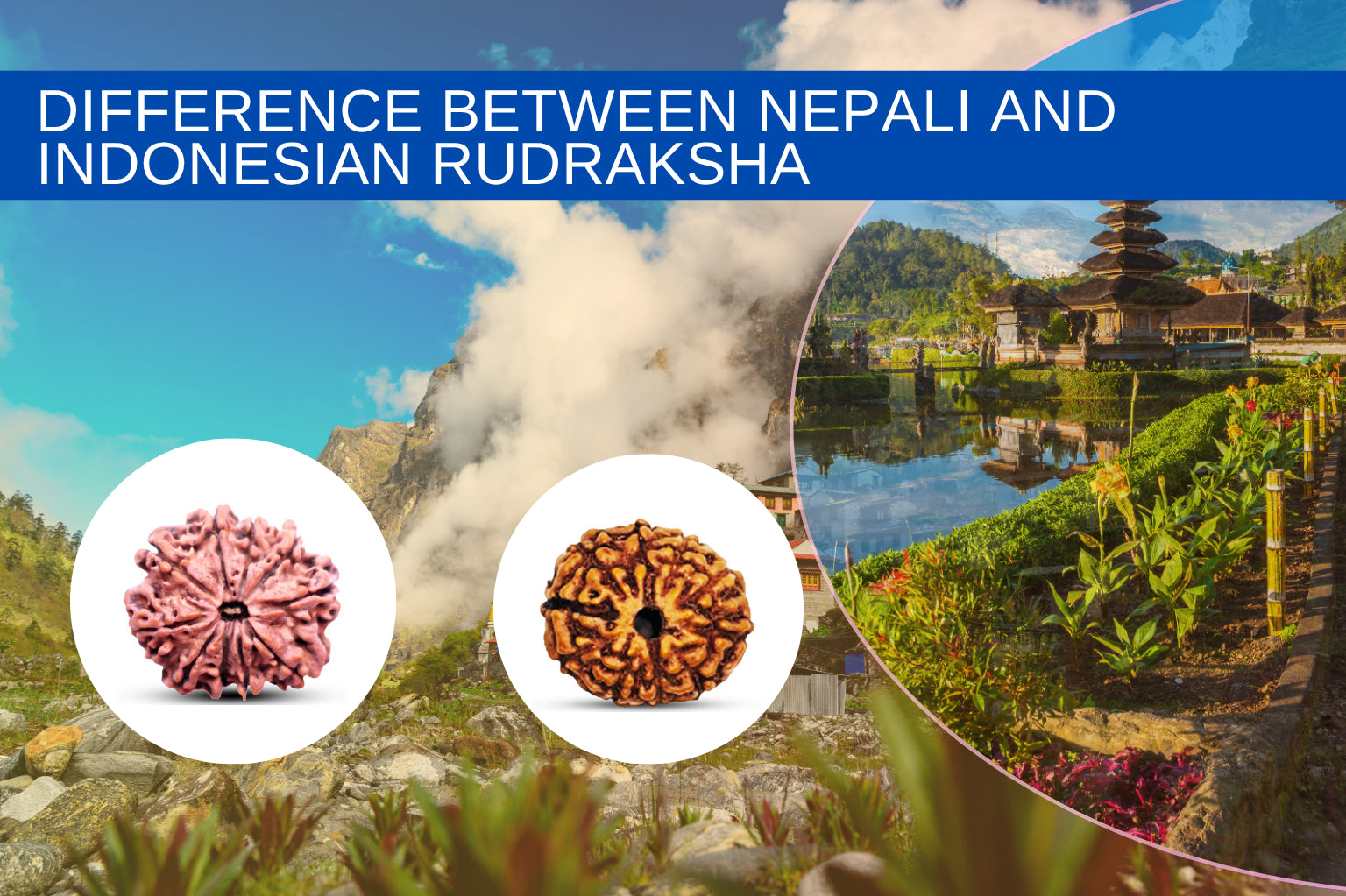
Nepali and Indonesian Rudraksha are two commonly discussed varieties in the spiritual products market. Both are traditionally valued and available in different Mukhi counts, bead sizes and product formats.
However, buyers frequently ask an important question: Which is better, Nepali Rudraksha or Indonesian Rudraksha?
The answer depends on what the customer is looking for.
Bead size, appearance, origin, availability, price and personal preference all play a role in the selection process. There is no universal rule that one origin is always superior to the other.
Brands such as Mauhurtika Rudraksha offer collections of both Nepali and Indonesian Rudraksha, allowing customers to explore different options.
This guide explains the key differences and what buyers should consider before purchasing.
1. What Is Nepali Rudraksha?
Nepali Rudraksha refers to Rudraksha beads marketed as originating from Nepal.
These beads are widely recognised in traditional Rudraksha markets and are often available in a variety of Mukhi counts and sizes.
Some commonly discussed characteristics include:
- Availability in a range of bead sizes.
- Naturally textured outer surfaces.
- Visible Mukhi lines or clefts.
- Individual beads, malas and pendants.
- Demand for rare or collector varieties.
Nepali Rudraksha is frequently selected by buyers who prefer comparatively larger beads or traditional mala designs.
However, size and appearance can vary from one bead to another. Buyers should always check the actual product dimensions rather than relying on origin alone.
Explore the Nepali Rudraksha collection at Mauhurtika.
2. What Is Indonesian Rudraksha?
Indonesian Rudraksha, also commonly called Java Rudraksha in the marketplace, refers to beads sold as originating from Indonesia.
These beads are often available in comparatively smaller sizes, making them suitable for certain mala, bracelet and everyday-wear designs.
Common product characteristics include:
- Smaller bead sizes in many market offerings.
- Different surface appearances.
- Availability in multiple Mukhi counts.
- Use in japa malas and wearable accessories.
- Different price ranges depending on specifications.
As with Nepali varieties, these are general market observations. Individual Indonesian beads may differ considerably in dimensions and appearance.
Customers should compare actual product photographs, measurements and documentation before deciding.
3. Nepali vs Indonesian Rudraksha: Key Differences
| Comparison factor | Nepali Rudraksha | Indonesian Rudraksha |
|---|---|---|
| Market origin | Nepal | Indonesia |
| Common market size pattern | Often larger | Often smaller |
| Appearance | Can have prominent natural ridges | Can have finer surface patterns |
| Mukhi availability | Multiple varieties | Multiple varieties |
| Product formats | Beads, malas, pendants | Beads, malas, pendants |
| Price | Depends on Mukhi, size and quality | Depends on Mukhi, size and quality |
| Selection | Based on individual product characteristics | Based on individual product characteristics |
The table describes common market patterns, not fixed botanical or quality rules.
A large Nepali bead is not automatically better than a smaller Indonesian bead. Similarly, a particular Mukhi count should not be assumed to be genuine simply because of its appearance.
4. Does Bead Size Determine Quality?
Bead size is one of the most visible differences customers notice when comparing Rudraksha.
Larger beads may be preferred for traditional malas or statement pendants, while smaller beads can be more convenient for compact jewellery and everyday accessories.
However, size alone does not establish authenticity.
A buyer should evaluate several factors together:
- Mukhi count.
- Natural surface characteristics.
- Dimensions in millimetres.
- Condition of the bead.
- Product-specific documentation.
- Seller transparency.
It is useful to request clear photographs and measurements before buying a high-value bead.
5. Which Rudraksha Should You Choose?
The right selection depends on individual requirements.
For Traditional Mala Use
Customers interested in japa and devotional practice may prefer a mala based on bead size, bead count, comfort and construction.
For Everyday Wear
A smaller bead or a pendant design may be more convenient for daily use.
For Collectors
Collectors may focus on rare varieties, individual bead characteristics, documentation and provenance.
For First-Time Buyers
First-time buyers should begin by understanding Mukhi classification, product origin, price and available certification.
Rather than choosing only on the basis of traditional claims or marketing language, buyers should compare actual product information.
6. Why Mukhi Count Matters
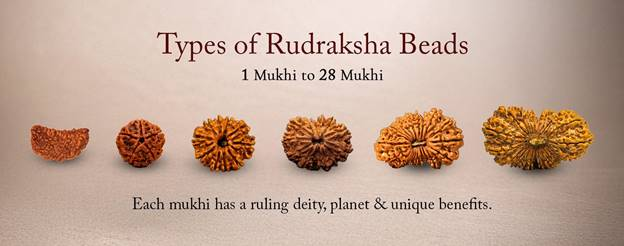
Mukhi refers to the natural lines or clefts visible on the surface of a Rudraksha bead.
Different Mukhi varieties have different meanings in traditional Hindu and spiritual practices.
Commonly discussed varieties include:
- 1 Mukhi Rudraksha.
- 2 Mukhi Rudraksha.
- 5 Mukhi Rudraksha.
- 7 Mukhi Rudraksha.
- 9 Mukhi Rudraksha.
- 11 Mukhi Rudraksha.
- 14 Mukhi Rudraksha.
The choice of Mukhi is traditionally influenced by spiritual beliefs and individual preferences.
Customers interested in a particular Mukhi should verify its physical characteristics and relevant documentation before purchasing.
Mauhurtika provides a range of Mukhi-based product listings through its Rudraksha online shop.
7. How to Compare Prices
There is no single fixed price for all Nepali or Indonesian Rudraksha.
Pricing may vary according to:
- Mukhi count.
- Bead size.
- Natural condition.
- Origin.
- Rarity and market availability.
- Laboratory documentation.
- Jewellery setting or additional craftsmanship.
A customer comparing two products should check whether the specifications are genuinely comparable.
For example, a single Nepali Rudraksha bead and an Indonesian 108+1 bead japa mala are different products. Their prices cannot be compared directly.
It is also important to understand what the quoted price includes, such as certification, silver capping, stringing, packaging and delivery.
8. Importance of Authenticity and Certification
Origin and Mukhi claims should be supported by relevant product information.
Before purchasing, buyers should check:
- Whether the seller clearly states the origin.
- Whether the bead’s dimensions are provided.
- Whether natural Mukhi lines are visible.
- Whether laboratory documentation is available.
- Whether the certificate corresponds to the product.
- Whether the seller explains the scope of verification.
X-ray imaging can help examine internal bead structure, while laboratory documentation can provide additional information about specified characteristics.
However, buyers should not assume that every certificate verifies geographical origin, age, rarity and all other product claims.
For further reading, see this scientific research on Rudraksha structure:
9. Explore Nepali and Indonesian Rudraksha at Mauhurtika
Mauhurtika Rudraksha is an Indian D2C brand based in Indore, Madhya Pradesh, operating under Medhaavi Digital LLP.
Its online store features both Nepali and Indonesian Rudraksha, along with malas, pendants, special combinations and collector products.
The website allows customers to explore products by Mukhi count and origin.
Useful links:
- Mauhurtika Rudraksha Homepage
- Shop All Rudraksha
- Nepali Rudraksha
- About Mauhurtika
- Certification Information
Customers who are unsure about their selection can contact the brand to ask about product availability, specifications and documentation.
Conclusion: Nepali or Indonesian Rudraksha?
Neither Nepali nor Indonesian Rudraksha should be considered automatically superior in every situation.
Nepali varieties are often preferred by buyers looking for larger beads, while Indonesian varieties can appeal to customers who prefer smaller beads and different mala styles.
The better choice depends on the individual bead, its specifications, intended use, available documentation and personal preference.
Before making a purchase, compare origin, Mukhi count, dimensions, product photographs and certification details.
Explore both varieties at Mauhurtika Rudraksha and make an informed choice.
Disclaimer: Descriptions of spiritual significance are based on traditional beliefs and cultural practices, not guaranteed scientific or medical outcomes.